

Navigating Change
Why that wild discomfort is your secret weapon for epic growth

You know that moment when you step into something new, could be a massive move abroad or just switching jobs. The ground shifts under you. Your chest tightens, thoughts race like “this is all wrong, turn back now” everything feels exposed and shaky.
It’s not just nerves; it’s this full-body destabilization, like your inner world got yanked out of orbit. Lonely, scary, disorienting, whispers of doubt everywhere. I’ve felt it deep, and thought it was reserved for the big leagues. Turns out? It crashes parties in every corner of life, big or tiny.
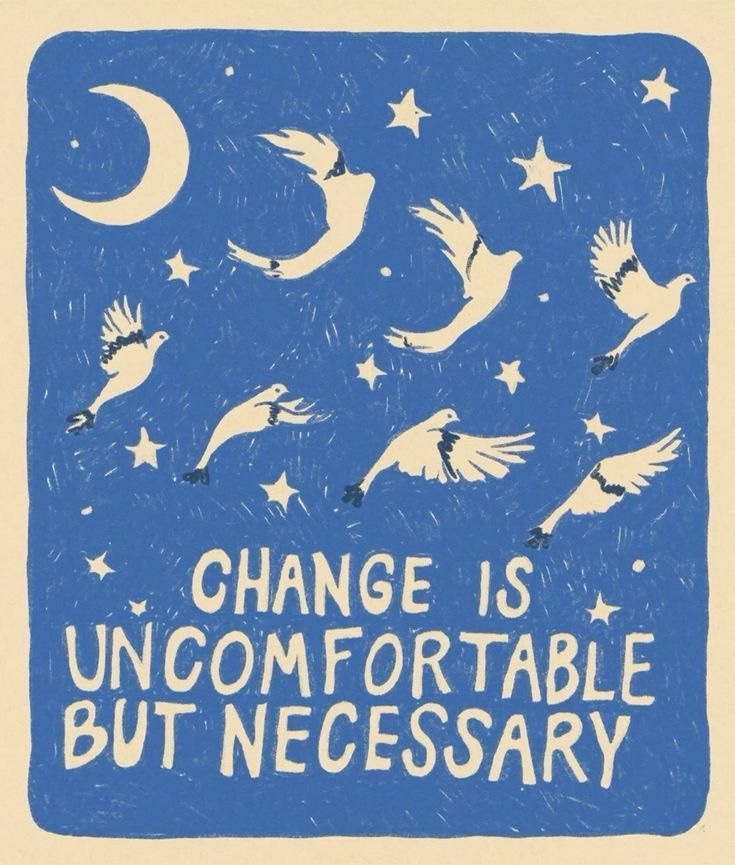
Recently I moved to a new house and I didn’t expect to feel this way because in the past I overcame way bigger changes, moving abroad alone for example, so I asked myself why it comes so intense, every time?
It’s your brain’s ancient wiring at play, tuned for survival in the known territory. Step out, and it floods you with stress signals, hormones spiking to shout “threat ahead!” A holdover from caveman days. But here’s where it gets exciting: this happens everywhere, in every arena. Your system isn’t broken; it’s just protesting the upgrade. But that protest is always temporary, a quick storm that passes, leaving clearer skies.
Living smack in the middle of it feels raw: the gut knot twisting tighter, mental loops spinning “why on earth did I choose this?”, a fog that blurs your usual confidence. Yet, pushing right through that? That’s the alchemical moment. Evolution doesn’t happen in cozy stasis; it sparks in the friction of adaptation.
Your brain literally reshapes, new pathways form, resilience hardens, capacities stretch. Stay huddled in comfort, and you flatline. Lean into the edge, and you expand into someone bigger, bolder, more alive. It’s the hidden mechanism: discomfort delivers the raw data your growth craves, turning potential into power. Studies on neuroplasticity nail it, these jolts accelerate rewiring, building you out faster than any smooth sail ever could.
So, how do we navigate it without getting swamped? Here’s what I do.
First, pause and name it out loud: “Okay, this is the shock talking, it’s not forever.” This isn’t woo-woo, it’s neuroscience. When that panic hits, your amygdala (brain’s fear center) hijacks rational thinking. Saying it aloud activates your prefrontal cortex, the rational boss, creating distance between you and the feeling. It’s like hitting the emergency brake on emotional spiral. This simple act rewires your response from reactive to response-able.
Pair it with deep breaths, feet planted firm, letting the wave crest. Your body’s in fight-or-flight when that destabilization hits, shallow breathing keeps the stress loop spinning. Deep diaphragmatic breaths (4 seconds in, 6 out) flip your nervous system from sympathetic (panic mode) to parasympathetic (calm mode). Feet firm on the ground anchors you physically when everything feels shaky. Let the wave peak without fighting it, resistance makes it bigger, acceptance makes it pass quicker. This physiological reset creates the space for clear thinking to return.
Then take that first micro-step, unpack one thing, nod hello to someone new, wander just one block further. The shock paralyzes with overwhelm, so shrink the mountain to a molehill. One single action bypasses analysis paralysis and creates proof: “I can do this.” Momentum is magic, that first step releases dopamine, nature’s motivator, making the next one easier. Start stupidly small. That’s the secret.
Remember your deeper why: The shock makes you forget why you chose this. Reconnect to your big picture, that move meant independence, that new route means adventure, that skill means confidence.
Reach out to a friend, hop into a quick chat; their nods remind you it’s normal. Isolation amplifies the shock; connection normalizes it. That “I’m the only one feeling this” lie? Busted when someone says “Girl, I felt that for a WEEK after my move.” Their stories shrink your monster, plus oxytocin from connection counters cortisol from stress. You’re not crazy. You’re human. They’re right there with you.
And as it eases, mark the shift note how day one dragged while day three hummed electric. This is your victory lap and future proof. Journaling the transition creates tangible evidence: “Day 1: fog, Day 2: less fog, Day 3: electric.” Next time the shock hits, you have receipts, you know the arc, you trust the process. This meta-awareness turns you from change victim to change navigator. Every cycle strengthens your belief: “I’ve crossed this before, I’ll cross it again, better every time.”
Using these tools helps me overcome that bad vibes and that “wrong” feeling I fought transforms into “exactly where I’m meant to be” faster than you imagine. Your world gets richer, your confidence turns unbreakable.
Have you ever felt that way going through changes? How do you handle these moments when change shakes you up? Drop your tips below, I’d love to hear what works for you!
Hope this helps,
Lux
Feeling Pink is an independent publication, written with love from a small seaside town in Sicily 🇮🇹.
If you enjoy reflections like this and want to keep reading, you can support my work and help it grow by upgrading.
Insightful read!
This is why fighters spar - a bit of controlled adversity, undertaken regularly and with progressive escalation, prepares a fighters mind to remain present in the very real "fight or flight" response in an actual fight. It allows them to perform, "under the lights", when they need to most!
I think you've done a great job of highlighting how this principle applies in all facets of life! 😁🙏
I loved this and I’m definitely in the middle of a change at the moment. The thing that really stood out was the acknowledgement to reconnect with the deeper why ! That was the reset /realignment that I needed to hear today . Thank you 🙏.